
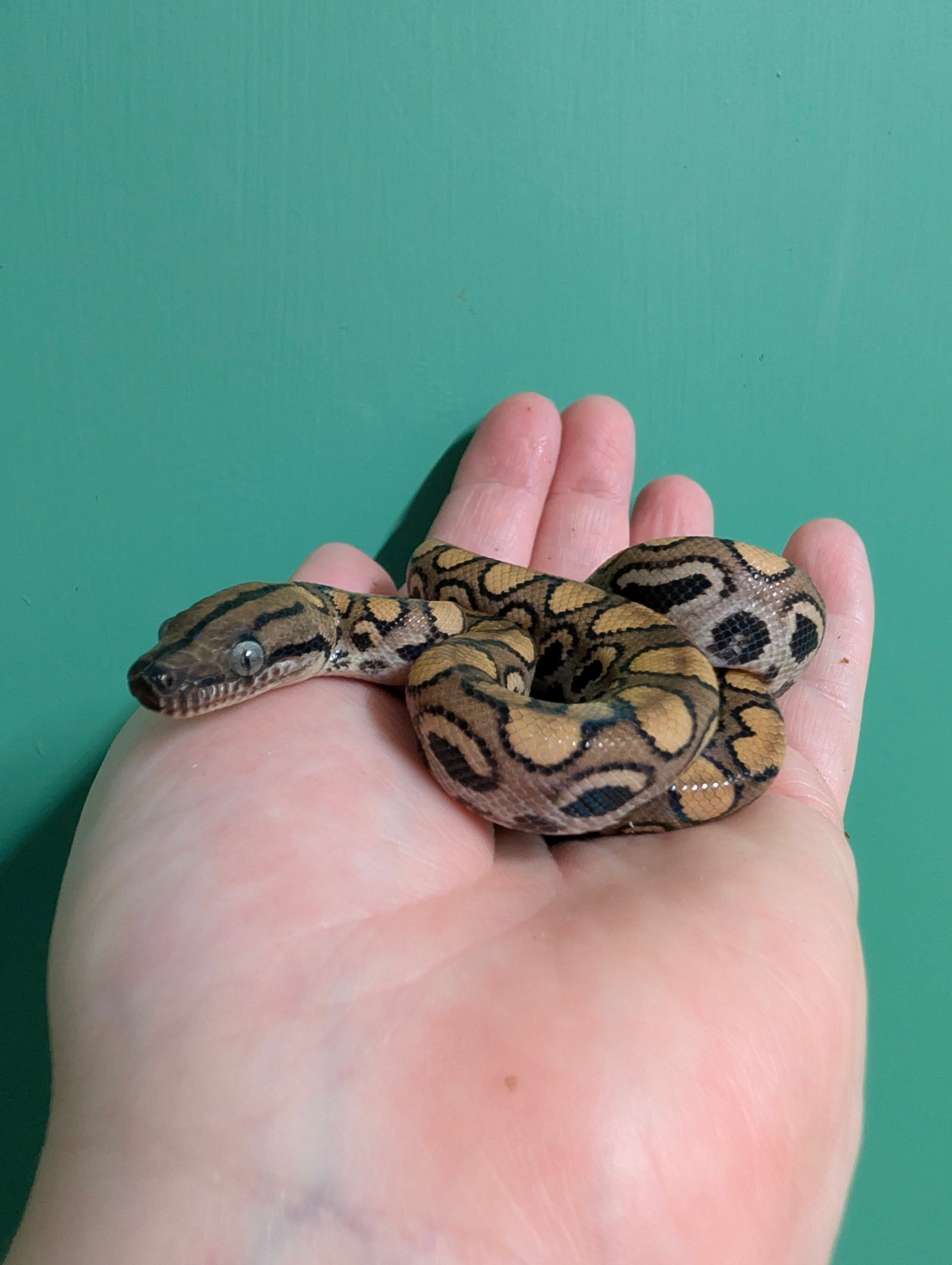
Brazilian Rainbow Boa
Epicrates cenchria
Description
The Brazilian Rainbow Boa (Epicrates cenchria) is one of South America's most spectacular snake species, celebrated for its extraordinary iridescent scales, rich reddish-brown colouration and beautifully contrasting dark circular markings.
Under natural sunlight or suitable artificial lighting, their scales reflect an incredible rainbow of colours, producing shimmering shades of blue, green, violet and gold. This remarkable effect is created by microscopic structures within the scales that interact with light, making the Brazilian Rainbow Boa one of the most visually striking boas in the reptile hobby.
Natural Habitat & Behaviour
Native to tropical South America, including the Amazon Basin, Brazilian Rainbow Boas inhabit humid forests and surrounding environments where they spend much of their time sheltered amongst vegetation, fallen timber and ground cover.
Predominantly nocturnal and secretive, they are generally most active during the evening and overnight. Although primarily terrestrial, they are capable climbers and benefit from an enclosure offering suitable branches, secure hides and opportunities to explore.
Size & Temperament
Brazilian Rainbow Boas typically reach approximately 150–200 cm in adulthood, although individual sizes can vary.
Young rainbow boas can be defensive when disturbed, particularly while adjusting to new surroundings. With appropriate husbandry, patient handling and consistent, positive experiences, many develop into manageable captive snakes.
Their attractive appearance and fascinating natural behaviours make them particularly rewarding for keepers interested in tropical boa species.
Housing & Husbandry
Brazilian Rainbow Boas require carefully maintained environmental conditions throughout their lives. Providing appropriate humidity is especially important, particularly for younger animals, which can be sensitive to dehydration.
A well-designed enclosure should provide a suitable thermal gradient, secure hiding areas, moisture-retaining substrate, fresh drinking water and sufficient floor space for natural movement.
Temperatures should be thermostatically controlled, with care taken to prevent excessive heat or prolonged drying of the enclosure.
These boas feed primarily on appropriately sized rodents in captivity, with feeding frequency and prey size adjusted according to the animal's age, size and body condition.
Due to their environmental requirements, Brazilian Rainbow Boas are best suited to keepers who are prepared to maintain stable tropical conditions and provide appropriate long-term accommodation.
Current Availability at RC Exotics
We currently have four captive-bred 2026 Brazilian Rainbow Boas available.
- Scientific Name: Epicrates cenchria
- Captive Bred: 2026 (CB26)
- Sex: Unsexed
- Quantity: 4 (0.0.4)
- Availability: Available
- Price: Contact for details
For further information, availability or enquiries, please contact RC Exotics directly through our WhatsApp enquiry service.